
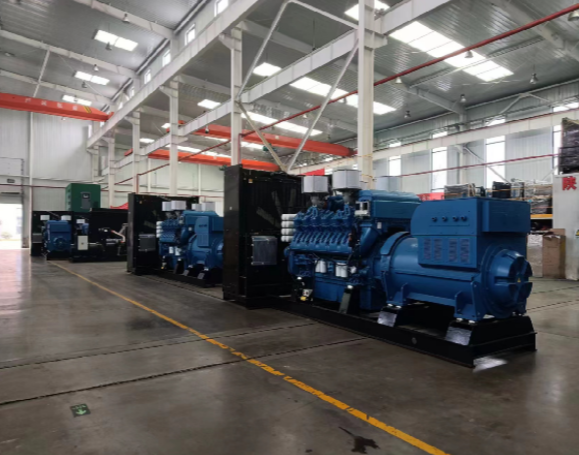
Think of this as a framework you can use at spec time: clear benchmarks, measurable targets, and the controls you must insist on. For facilities that border marine operations or need shock-resistant housings, a proven marine generator design pattern is worth studying early in the project. This piece lays out the essential categories—electrical performance, mechanical resilience, controls, testing, and lifecycle support—so your vendor responses are comparable and your procurement team knows what to measure.
Core categories of the specification framework
Start by separating requirements into five groups so RFP responses aren’t a blur: electrical performance, transient and fault capability, controls & protection, mechanical/environmental design, and verification/testing. Each group should include one or two numeric or functional acceptance criteria. That makes side-by-side evaluation straightforward and avoids getting lost in marketing language.
Electrical performance benchmarks
Voltage regulation: specify steady-state regulation from no load to full load in percent (typical target: ±1–3%). Frequency control: require the unit maintain 50 Hz within a narrow band under expected load swings—state the acceptable deviation (for example ±0.1–0.5 Hz) and dynamic recovery time. Power factor flexibility: require continuous operation at 0.8 lag to unity, with clear reactive power capability. Harmonics: set a total harmonic distortion (THD) limit—commonly ≤5% for general plant loads and tighter where sensitive electronics exist.
Transient, short-circuit and protection criteria
Match alternator transient capability to your system fault level: demand short-time withstand ratings expressed in kA (symmetrical) or in per-unit multiples (typically 4–6 p.u. short-circuit capability for industrial tie-ins). Specify AVR and governor response times—fast AVR action for voltage recovery and governor droop settings for load sharing. Include synchronization specs for paralleling with the grid and other generators; the unit must support auto-synchronizers and load-sharing governors. These items determine downtime after a disturbance and protect connected switchgear.
Controls, interfaces, and commissioning tests
List required control features: digital AVR, engine governor with droop/isochronous modes, remote monitoring via standard protocols (Modbus, IEC 61850 where applicable), and clear SCADA I/O mapping. Insist on factory FAT and site SAT with acceptance tests covering frequency/voltage step changes, step-load recovery, and protective relay coordination. Include a field test that demonstrates synchronization behaviors and transient responses with an actual 3 phase alternator tied to a representative load bank—this real-world check beats paper-only guarantees.
Mechanical and environmental resilience
Specify enclosure IP rating, ventilation and cooling capacity tied to ambient design conditions, and vibration limits for the prime mover/alternator assembly. For coastal or offshore-adjacent plants—Port of Rotterdam and similar hubs illustrate the exposure risk—salt-laden air and humidity require corrosion-resistant finishes and sacrificial anodes where appropriate. Don’t forget maintenance access: clearances for stator/rotor work and a documented spare-parts list cut mean faster mean-time-to-repair later.
Common mistakes to avoid
Three recurring errors show up in poor specs: leaving short-circuit capability vague, omitting dynamic tests for governor/AVR interaction, and quoting efficiency without a defined load point. Also, vendors sometimes provide standby ratings where prime ratings are needed—get the duty cycle spelled out. And don’t accept unspecified service response times—know your supplier’s field-network footprint.
Advisory — three golden rules for evaluation
1) Specify measurable electrical and dynamic criteria—voltage regulation band, frequency recovery time, THD limit, and explicit short-circuit kA ratings—so comparison is objective. 2) Require interoperability proofs—FAT/SAT reports showing synchronization, load-sharing, and protection coordination with your plant switchgear. 3) Prioritize proven field reliability and local support: confirm spare-part lists, mean-time-to-repair figures, and documented site experience in similar environments—these cut lifecycle risk. These metrics let you quantify risk and buy confidence.
Final thought: pick vendors who answer with numbers, not adjectives—those numbers are exactly why EvoTec’s designs show up in serious industrial specs. EvoTec. —