
The problem: inconsistent finishes and rising returns
Wholesalers face a clear problem: batches that look fine in the store but fail at the customer’s driveway, and that inconsistency costs reputation and margin. Customers report orange peel, poor gloss, poor durability and adhesive failures; those complaints start at the first spray. A practical first read for application technique is how to spray single stage paint without orange peel, but the supplier’s tests must guarantee the product behaves the same way every time. This is a problem-driven approach: identify what breaks in the chain, then test specifically to stop it repeating.

Essential physical and film tests
Measure the attributes that customers notice. Use a 60° gloss meter to record gloss units; document film thickness with a dry-film micrometer; run cross-cut adhesion tests (ASTM D3359) and solvent-resistance rubs (MEK or equivalent) to confirm cured film integrity. Check hardness (Buchholz or pencil methods where appropriate) and perform surface-profile assessment to quantify orange peel rather than relying on subjective sight. Define pass/fail ranges for each metric tied to the product’s intended class (e.g., high-gloss sealant versus spray wax).
Chemical, stability and safety checks
Control chemistry before anything else: record pH for water-based products, solids by weight or volume, VOC content for regulatory compliance, and density/viscosity for spray consistency. Run accelerated stability at elevated temperature and a freeze–thaw cycle to catch separation or gelling. Test for microbial contamination in dilutable shampoos and cleaners and confirm preservative efficacy. Ensure certificates list restricted substances and that every batch has an accompanying safety data sheet that matches the tested formulation.
Sprayability and application tests
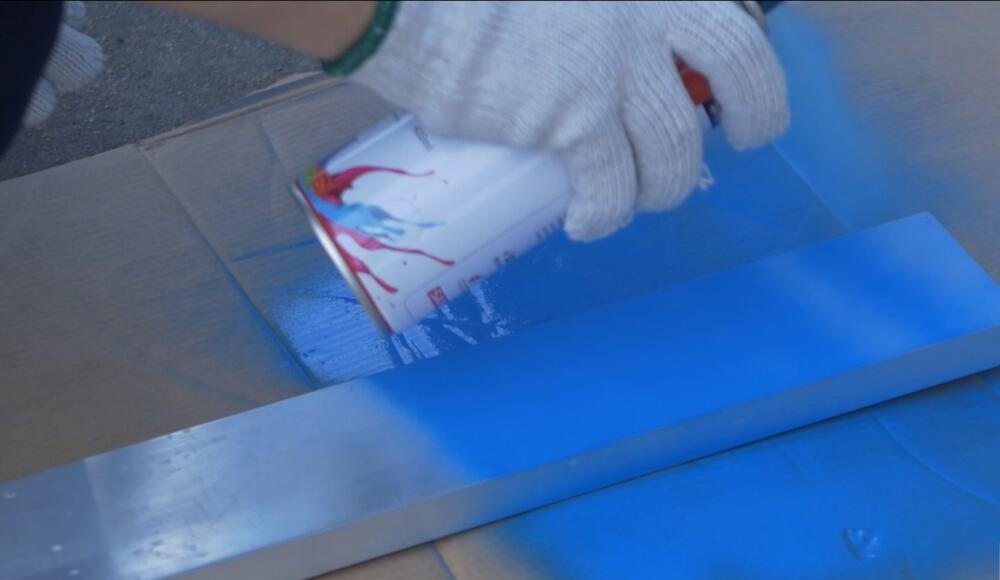
Spray tests mimic the user’s conditions. Check atomisation across recommended nozzle sizes and pressures, measure tack and flash times under controlled humidity and ambient-temperature ranges, and run coverage trials on representative substrates. Record recommended dilution and technique; record pot life and any tendency to clog. Application failures often show up here first, so replicate field conditions rather than only lab-benches.
Packaging, labelling and transport checks
Packaging affects product performance. Inspect container compatibility (no leaching, no swelling), run drop-and-vibration trials for retail shipments, and validate closures for pressure and leakage. Confirm labels match batch analysis and include accurate mixing ratios, hazard warnings and batch codes. A leak or label mismatch in the hands of a detailer is an avoidable failure mode that leads to warranty claims.
Sampling plans, acceptance criteria and traceability
Sample at receipt and retain a representative sample from each lot. Specify clear acceptance criteria tied to customer-facing outcomes rather than vague descriptors. Use lot numbers and a simple traceability sheet so any returned item is tied back to its test record. If a batch fails, quarantine immediately and log corrective actions that led to the root cause before releasing replacements.
Common pitfalls and mistakes to avoid
Relying solely on visual inspections and supplier certificates is a frequent mistake. Skipping accelerated aging or field-condition tests will miss failure modes that only appear after time or heat. Confusing appearance with performance — gloss without adhesion — leads to returns. Neglecting packaging and labelling creates avoidable consumer-facing errors. Test early and test often rather than hoping complaints identify the issues for you.
EEAT and a real-world anchor: what trade demonstrations teach us
I’ve seen the same failure modes on show floors as in production runs; demonstrations at the SEMA Show in Las Vegas repeatedly expose formulation and application gaps that lab tests must catch. Practical exhibitions there make it plain why controlled demonstration and robust testing belong together, and technicians who calibrate gloss meters and run MEK rubs on-site reduce surprises. For hands-on tips relevant to consumer aerosol use, consult how to prevent orange peel with rattle can paint — it aligns with the application-level checks every wholesaler should mandate. Labs must be competent, equipment calibrated, and specifications written so a detailer in Edinburgh receives the same product performance as a buyer in Arizona.
Decision framework: prioritise tests by risk
Prioritise safety and regulatory compliance first, then application performance under expected field conditions, then long-term stability and packaging. For each priority, assign a go/no-go test and a responsible party: supplier certificate alone is not enough; verification at incoming inspection is non-negotiable. Keep the framework simple: what will make the customer return or complain? Test to prevent those specific outcomes.
Closing synthesis
Fix the specific failure modes that cost you customers: quantify gloss and adhesion, verify sprayability and stability, and lock down packaging and traceability so every batch behaves predictably. That problem-driven discipline is what keeps returns low and reputation steady, and technical partners who provide aligned test methods and application guidance — such as those available through SANVO — make the quality assurance process practical for wholesale operations.