
Introduction — Why the air at the workbench matters
Have you ever paused mid-cut and wondered what the tiny, invisible cloud above your work actually carries? I ask because I’ve stood beside machines that slice metal and plastics and watched the air change—slowly, then noticeably. In shops where a laser fume extractor is treated as an optional add-on, workers report headaches, smells, and dust on every surface. (It nags at you.)
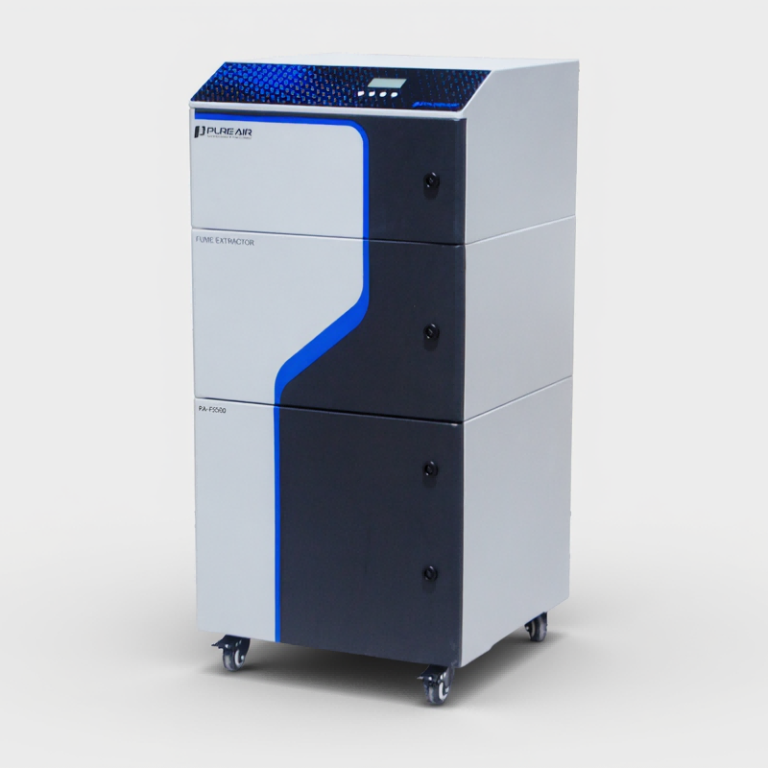
Consider the scene: a small fabrication bay using a CO2 laser, an operator focused on throughput, and an older extraction arm that struggles to keep up. Measurements often show elevated particulate matter and VOCs near the source—hundreds to thousands of particles per cubic centimeter in some cases—so the question becomes: what can we do better, and why haven’t we already? I’m approaching this with curiosity and a little impatience; we owe people cleaner, safer air. Let’s move from that unease to the specifics—what’s failing and what we can fix next.
Deeper Layer: Why traditional fixes fall short (CO2 laser fume purifier in focus)
When I look at the usual toolkit—basic capture hoods, short extraction arms, and single-stage filters—it’s clear why problems persist. Right away I want to point you to practical alternatives, for example the CO2 laser fume purifier, which already addresses several common gaps. But many shops still rely on setups that were never designed for today’s throughput or materials. The old systems have limited capture velocity, worn fans, and filters that clog quickly. That combo reduces effective airflow and raises backpressure—so fumes escape before they ever reach the filter.
Let me be frank: filtration alone isn’t a cure. You can slap a HEPA filter in place and still miss the mark if the extraction arm is poorly positioned or if the ducting collapses under load. I’ve audited lines where activated carbon beds were undersized, and VOCs slipped past. The result? Recurrent maintenance, rising operating costs, and frustrated operators. Look, it’s simpler than you think—measure at the source, match the capture velocity to the laser power, and size filters to the expected load. Shortcuts cost more in downtime and health complaints than the upfront investment would have.
What’s the single biggest oversight?
Usually it’s ignoring the dynamic nature of cuts: different materials yield different particle sizes and chemical profiles, yet many systems are set-and-forget. That’s a design flaw—and a human one.
Forward-Looking Comparison: Principles and practical metrics for the next step
Moving forward, I prefer to think in principles rather than products. Newer solutions combine staged filtration (pre-filter + HEPA + activated carbon), variable-speed blowers, and sensor-driven controls—some even add edge computing nodes to monitor performance in real time. The idea is straightforward: reduce load early, adapt fan speed to demand, and capture both particulates and gases. The CO2 laser fume purifier models I’ve tested embody many of these ideas—smart dampers, better seal integrity, and modular filter bays that make maintenance less painful.
Technically speaking, matching power converters and fan curves to ductwork length matters. Short, kinked ducts kill flow; oversized blowers waste energy. I’ve seen setups where adding a pressure sensor and a simple control loop cut filter change frequency in half—funny how that works, right? Also, consider how easy servicing is; if an operator avoids opening a cabinet because it’s awkward, the unit performs worse. Human behavior influences outcomes as much as engineering does.
What’s Next — Practical metrics to judge a system
Here are three evaluation metrics I recommend you use when comparing systems: 1) Effective capture velocity at the cut point (measured, not calculated); 2) Filter change interval under real workload (months, not weeks); 3) Real-time monitoring capability (sensors + alerts). If a system scores well on those, it’s likely to reduce airborne particulate and VOC exposure while keeping operating costs reasonable. I’m partial to solutions that balance robust filtration with sensible controls—because we work with people, not just machines.
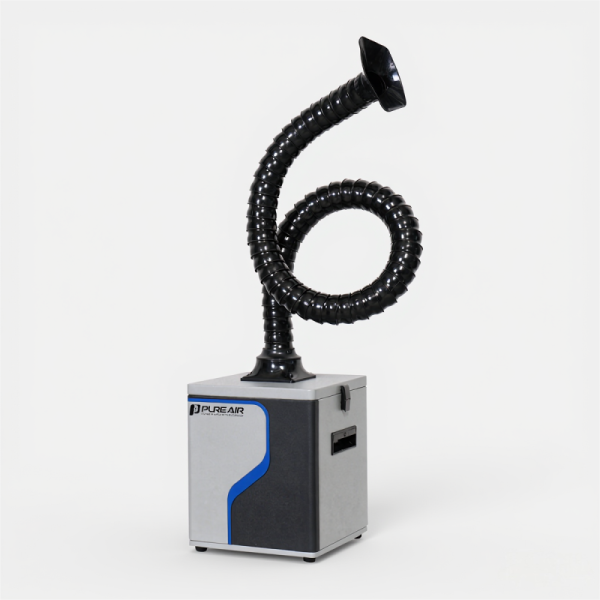
In closing, I’ll say this plainly: investing a little in smart extraction saves a lot in sick days, rework, and stress. It’s pragmatic and humane. If you want a partner that builds systems around these principles, take a look at PURE-AIR—they’ve been practical where others were theoretical, and that matters on the shop floor.