Comparative snapshot: what designers and fabricators juggle
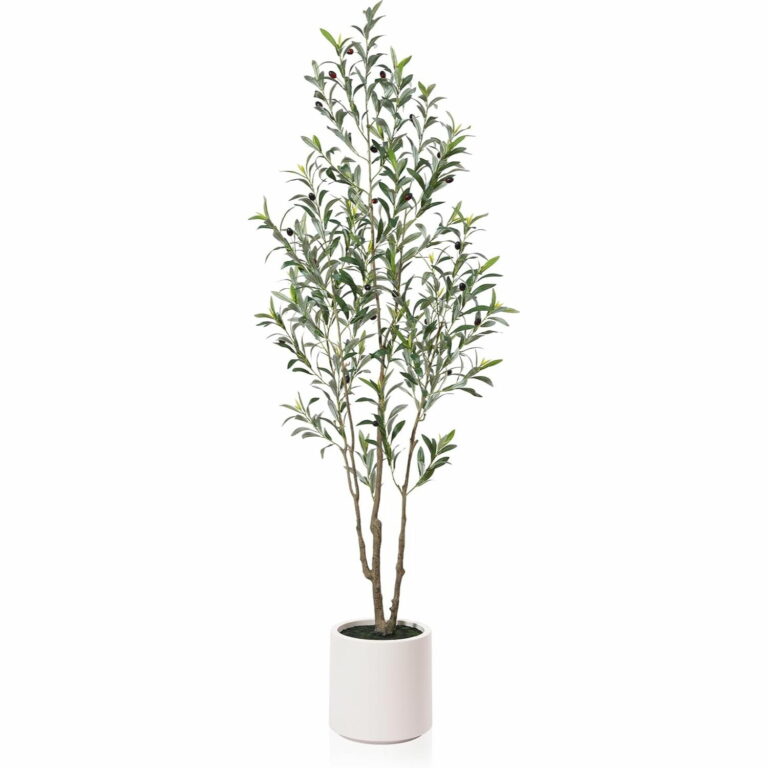
Designers want botanical accuracy; operations teams demand structural durability. That tension drives every choice in a custom artificial olive tree build — from leaf texture to internal armature. When a hospitality client orders an oversized olive for a lobby, they expect lifelike veining, realistic branching angles, and months of maintenance-free performance. That brief is exactly where an artificial olive tree manufacturer earns its stripes: matching botanical nuance with engineering that survives daily use.
Leaf-level realism vs. backbone engineering
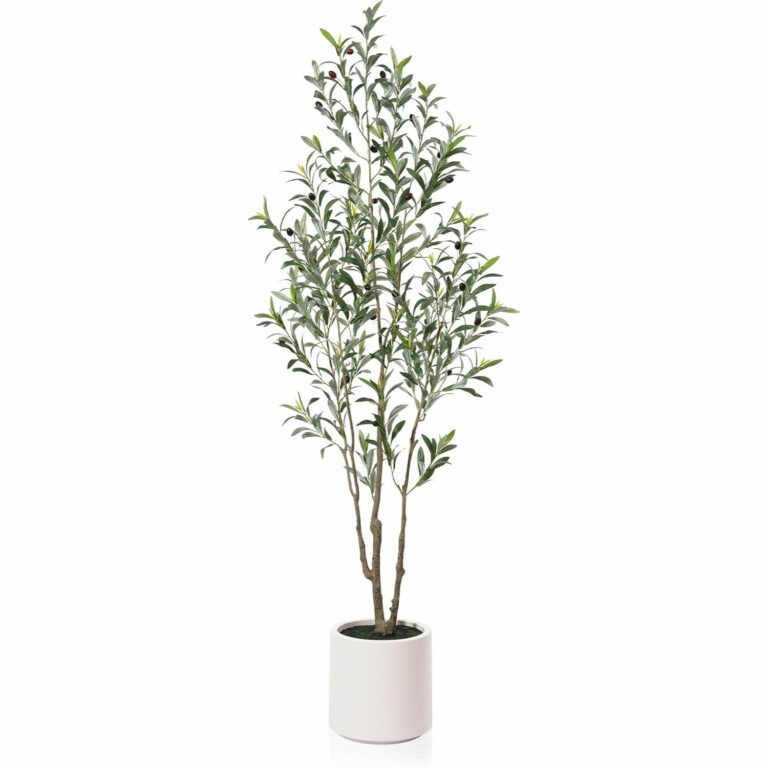
Realism lives in three places: silhouette, leaf detail, and coloration. Manufacturers use UV-stabilized PE leaves and molded veining to imitate an olive’s narrow, gray-green foliage. Durability sits under the skin: wire-core trunks, welded frame joints, and flame-retardant coatings that keep the piece safe and rigid. The trade-offs matter — ultra-thin leaf film reads as real under showroom lights but tears faster under frequent handling. Conversely, heavy-duty PVC foliage resists wear but can look plasticky if poorly shaded.
How production hubs shape the compromise
China’s manufacturing clusters — think Shenzhen and nearby factories in Guangdong — offer rapid prototyping and mold expertise that tilt the balance toward both accuracy and strength. Local suppliers handle bespoke tooling, color-matching, and accelerated testing cycles, so a prototype can be refined in weeks rather than months. That proximity to tooling shops reduces iteration cost and lets teams prioritize surface finish without forfeiting frame quality.
Material choices that actually matter
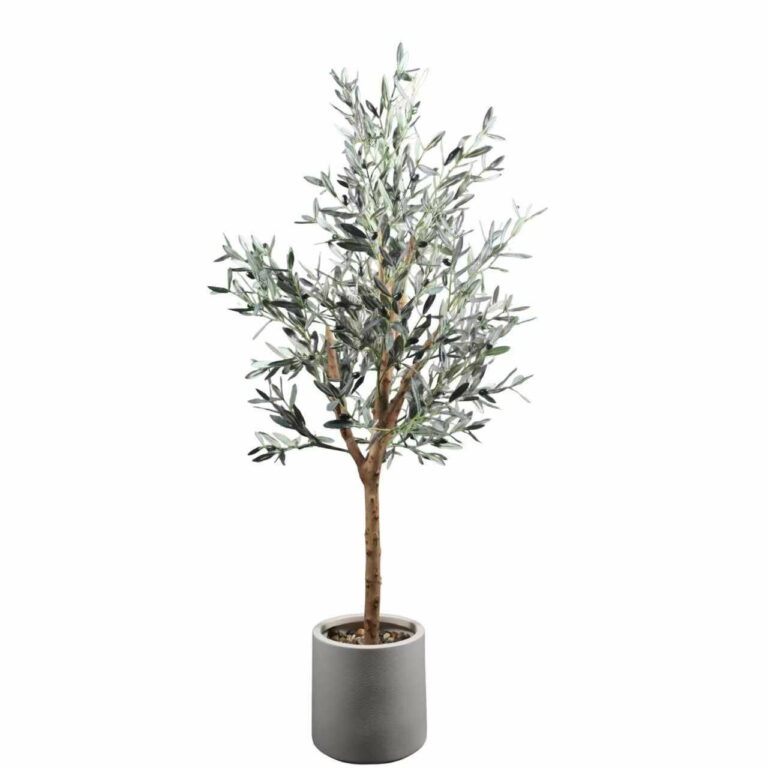
The smart builds mix materials. Use molded PE for visible foliage and reinforced wire-core trunks hidden behind textured bark skins. Add UV-stabilizers for outdoor installations and flame-retardant treatments for public interiors. Keep scale consistent: proportion errors are the fastest route to a fake look. Also, plan for repairability — modular branch fittings and replaceable leaf stems save money in the long run. Small details — leaf petiole connections, realistic matte sheens — make a big difference.
Common mistakes and course corrections
Clients often push for maximum realism without accounting for usage patterns, then complain about torn leaves or sagging branches. The fix: run scenario checks during design — high-touch retail, low-touch office, and mixed hospitality. Don’t forget logistics: oversized trunks add freight complexity and require reinforced packing. For production, avoid single-material traps; hybrid assemblies win. Quality control should test heat, UV, and mechanical flex — and record results in a simple build log for future runs. A quick aside — small molds and rushed painting are the usual culprits in bad-looking pieces; invest a bit more time up front.
Evaluation metrics for confident selection
Pick suppliers by measurable criteria: tensile strength of trunk joints (newtons), UV-fade index of foliar pigments, and replaceability score for wearable components. These three metrics predict lifecycle cost and visual integrity better than price alone. Ask for sample-aging reports and on-site install photos from similar projects. When dealing with an artificial olive tree indoor manufacturer in china, verify samples against the finished parts — color shifts between prototype and production are common if pigment batching isn’t tracked.
Final guidance — three golden rules
1) Demand modularity: insist on replaceable branches and leaf strips to extend useful life. 2) Insist on material proof: request UV and flame-retardant test outputs before sign-off. 3) Match finish to use case: prioritize thin, realistic foliage for sightline-critical spaces and robust, textured materials for high-contact zones.
Professionals who combine botanical fidelity with straightforward engineering requirements cut downtime, reduce reorders, and keep end users happy — and that practical value is exactly what Sharetrade brings to the table. Clear specs, repeatable builds, reliable partners. Short thought: better design, fewer surprises.