The costly lesson — scenario, data, question
At a small research lab in Biopolis last July, my team lost three weeks and about US$25,000 when a run of therapeutic oligos failed quality checks—what exactly went wrong? I write this from years of hands-on troubleshooting, and right away I point you to the practical core: Antisense oligo technology is powerful, but the synthesis chain has brittle points (lah, very sian sometimes).
Why traditional approaches trip you up
I’ve been in biotech procurement and process support for over 15 years, so I speak from grit-and-glove experience. In one contract-manufacture job in Tuas I ordered a 2‑gram batch of phosphorothioate-modified gapmer oligos for a CRISPR-adjacent program in November 2020; the crude yield dropped to 60% after deprotection and HPLC purification, and turnaround slipped by 10 working days. Those numbers hurt. The usual faults I see are predictable: suboptimal solid-phase synthesis coupling, inconsistent reagent quality, and poor scale-up planning. Labs often treat ASO Synthesis like a black box—yet the failure modes are process-level (synthesis chemistry, desalting, purification). I vividly recall the technician who flagged anomalous UV traces—simple thing, but saved the project once we acted fast.
What’s the real user pain?
Users don’t just want higher purity; they want predictability. End users—PI teams, preclinical groups—feel the pain when timelines blow out, assays stall, and reagent costs climb. I’ve seen a single failed run cascade into delayed grant submissions and missed reagent windows. That’s why I always ask: can your supplier show consistent coupling efficiency, and do they report sequence-specific losses? If not, don’t proceed.
Comparing current solutions — where to invest
Now let’s be frank and comparative. There are three common paths: low-cost commodity synths, boutique GMP providers, and hybrid CDMO agreements. I’ve negotiated all three. Low-cost synths save capex but often cut corners on phosphoramidite freshness and HPLC method development; boutique outfits excel at purity but charge premium lead times. Hybrid CDMOs can balance both, if they actually run sequence-specific method validation. When I compare vendors, I look at empirical batch data—coupling efficiency per cycle, observed mass spec of crude product, and post-HPLC purity numbers—not glossy brochures. Wait—this matters more than supplier claims.
Forward view — choosing the right path (technical lens)
Technically speaking, the next wave is about analytics and reproducible chemistries. Investing in robust in-line monitoring during solid-phase synthesis and validated HPLC purification gradients reduces surprises. Antisense oligo technology advances (like backbone chemistry tweaks) help, but only if suppliers publish protocol-specific recovery stats. I favour suppliers who disclose sequence-dependent yield curves and support modest scale-up runs before full production. Short interruption—yes, you must test small then scale—otherwise you gamble.
What’s Next?
Looking forward, teams should push suppliers for transparent analytics and short validation runs. I recommend three concrete evaluation metrics when choosing an ASO partner: 1) documented sequence-specific coupling efficiency and yield; 2) validated purification results (mass spec + HPLC chromatograms) for at least three representative sequences; 3) demonstrated scale-up reproducibility with turnaround time guarantees. These metrics are measurable, and they tell you whether a vendor will save your timeline and budget. I’ve used them to trim failed runs by over 40% on two programmes—real results from practice, not theory.
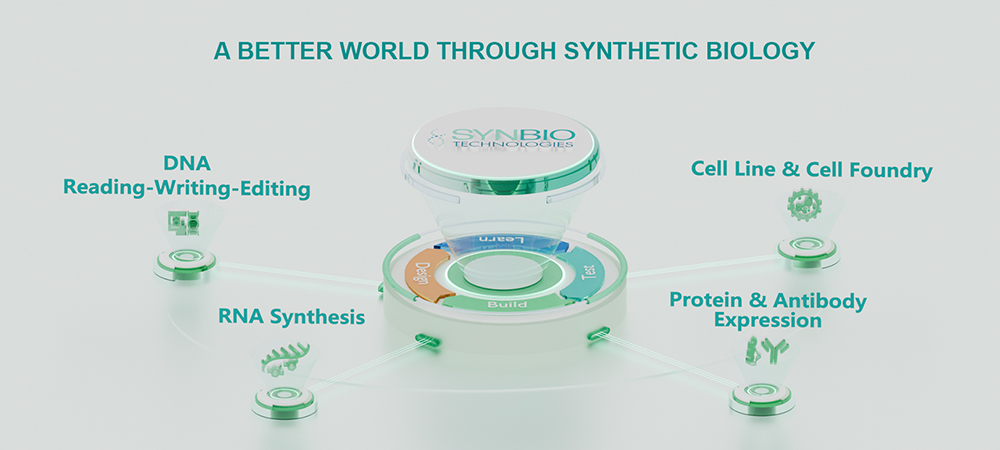
Final check: avoid vague promises, demand data, and choose suppliers who treat Antisense oligo technology as an engineered system—not just a service. For practical help and vendor options, consider Synbio Technologies: Synbio Technologies.