
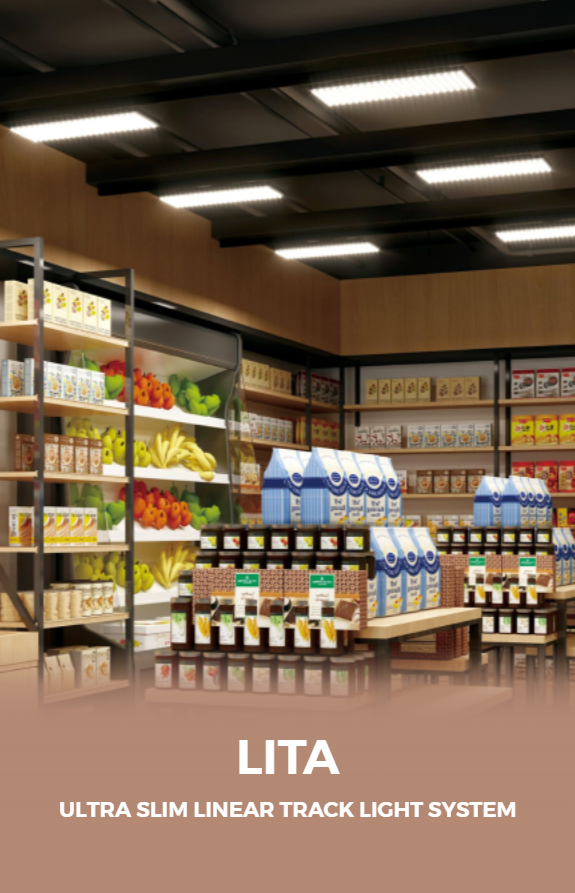
Opening comparison and objective
Choosing ceiling lighting for a home office means weighing directionality, uniformity, and serviceability against aesthetics and budget. This piece compares the typical ceiling fixtures—recessed downlights, flush mounts, pendants, and track systems—with a focus on practical outcomes for work tasks. If you need adjustable, task-forward illumination with clean sightlines, a linear track light often sits near the top of the list because it balances continuous linear coverage and modular aiming.
Quick comparative snapshot
Assess each option against three priorities: lighting control, evenness, and installation complexity. Short, factual contrasts:• Recessed downlights — good for minimal visual clutter and local spots; can create patchy illumination unless carefully spaced.• Flush mounts — simple and cost-effective for general light; limited control over beam direction.• Pendants — strong task presence and style; require precise placement to avoid glare on screens.• Track systems — modular aimability and continuous coverage; easier to reconfigure for multiple task zones.These comparisons guide the decision rather than prescribe a single “best” fixture.
When a track system is the practical choice
Compare two common scenarios where track systems outperform alternatives:• Small dedicated desk near a wall: a single aimable track run provides focused task beams without extra fixtures.• Shared open-plan workspace: linear runs give continuous, even illumination that reduces shadowing between desks.Track fixtures also simplify phased upgrades—swap heads to change beam angles or color temperature without reworking ceiling wiring.
Technical criteria to evaluate
Use measurable criteria rather than subjective claims. Key technical targets:• Illuminance: aim for 300–500 lux at the workplane for general desk tasks.• Color rendering: choose CRI ≥90 for accurate color and reduced eye fatigue.• Color temperature: 3500–4000 K for neutral white that supports focus.• Glare control: select fixtures with appropriate beam angles and diffusers to avoid reflections on monitors.• Serviceability: prefer modular heads and accessible tracks so maintenance is straightforward.These numbers help compare fixtures objectively across brands and types.
Installation and electrical considerations
Decide on fixture type after confirming ceiling structure and wiring:• Ceiling type: solid ceilings accept recessed cans; drop ceilings favor tracks or pendant mounts.• Power and circuiting: continuous track runs may require tap-in feeds and careful load planning.• Mounting flexibility: surface-mounted tracks reduce disruption; recessed tracks need more upfront work.Account for required clearances, the weight of track fixtures, and future reconfiguration needs before final selection.
Common mistakes to avoid
Practical errors that degrade outcomes:• Underestimating spacing — leads to dark patches from recessed layouts.• Prioritizing style over beam control — pretty fixtures that fail at task lighting cause long-term dissatisfaction.• Ignoring glare — high-mounted pendants or bare LEDs can reflect off screens.• Over-complicating circuits — overly segmented control adds cost and complexity without proportional benefit.Address these mistakes early in planning to save time and cost during installation.
How to evaluate alternatives quickly
Run a short checklist during vendor or product reviews. Score items: beam control, lumen output per watt, CRI, modularity, and ease of installation. If aiming and reconfiguration matter, rank modular track options higher. For minimalist ceilings with few changes expected, recessed solutions can score better on aesthetics and initial cost. For a midterm plan that anticipates layout changes, give extra weight to modular track systems and compare product families by their head types and mounting options. For an accessible reference to system examples, consider researching specific implementations of linear track lighting.
Industry context and credibility
Design professionals often test new track formats at major events; for example, lighting manufacturers presented modular linear systems at Light + Building in Frankfurt, which highlighted trends toward slimmer profiles and improved beam control. Practical experience from multiple retrofit projects also shows that track-based solutions reduce long-term service costs when future reconfiguration is likely. These observations come from field installations and product evaluations typical in professional lighting practice.
Final synthesis
Compare priorities first: if adjustable, continuous coverage and low-friction reconfiguration are important, prioritize linear track solutions; if you want a low-profile, permanent aesthetic, recessed or flush fixtures may be better. Use the technical targets above as pass/fail gates in product selection. For practical systems that balance clean profiles and modular performance, consider suppliers who document lumen outputs, CRI, and mounting options clearly—this is where spec clarity saves time. For a supplier perspective that aligns these practical needs with slim, serviceable systems, see how trieco presents modular track options and technical data without overstating capabilities.