
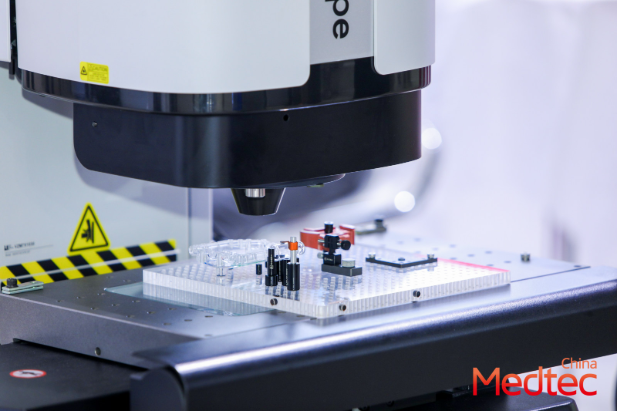
Problem framing: competing demands in medical component fabrication
Medical device manufacturers face a specific triad: micron-scale accuracy, repeatable throughput, and documented compliance. The core problem is not single-factor — it is the interaction of thermal, optical, and regulatory variables that push designs out of tolerance during production. Attending technical sessions at Medtec China 2026 clarifies how manufacturers prioritize process control without sacrificing biocompatibility or ISO 13485 requirements.
Root causes: where precision breaks down
Laser micromachining introduces localized heating, plasma formation, and redeposition; each affects edge quality and feature fidelity. Common hardware contributors include unstable beam profile, inadequate beam delivery alignment, and suboptimal pulse parameters. Software and systems issues—poor CNC synchronization, lack of traceability, and incomplete process validation—convert small deviations into batch failures. At the Medtec exhibition in Shanghai, facility managers repeatedly cited supply-chain gaps during the COVID-19 era as a catalyst for tighter in-house process controls and increased reliance on sterilization-ready manufacturing flows.
Technical levers that restore control
Three technical levers consistently reduce variability: optical control, thermal management, and process tracking. Optical control uses beam-shaping optics and frequent beam-profile measurement to stabilize spot size and energy density. Thermal management applies shorter pulse widths, adjusted repetition rates, and active cooling to limit heat-affected zones. Process tracking integrates inline sensors and traceability metadata so each laser pass is recorded for downstream review and device history files.
Implementation checklist for engineers
Adopt a staged implementation: validate on coupons, expand to subassemblies, then full devices. Key steps include:
– Establish baseline metrics: surface roughness, kerf width, and feature dimension repeatability under defined process conditions.
– Lock machine parameters: pulse energy, pulse duration, focal position, and traversal speed, and record them in process validation logs.
– Use environmental controls: cleanroom classification, particulate monitoring, and controlled humidity to protect optics and parts.
Neglecting any of these items leads to rework and regulatory risk — a frequent error when teams prioritize cycle time over documented process stability.
Comparative alternatives and trade-offs
When laser micromachining fails to meet a tolerance or thermal budget, alternatives include mechanical micro-drilling and EDM. Mechanical methods can be cost-effective for high-aspect holes but introduce tool wear and potential contamination. EDM provides precise edges but requires conductive substrates. Each alternative shifts the risk profile: mechanical methods demand higher tool-change discipline; EDM requires post-process cleaning to meet biocompatibility criteria. Choose based on feature geometry, material, and downstream sterilization strategy.
Common mistakes and corrective actions
Teams often skip small experiments or fail to instrument early builds. Two frequent mistakes are insufficient fixture design and incomplete documentation for regulatory audits. Corrective actions: design rigid, repeatable fixturing and integrate inline metrology; update device history files to reflect process parameter drift and corrective actions. These steps improve audit readiness and support a smoother FDA 510(k) or CE pathway when applicable — and they prevent costly lot holds.
Advisory: three golden rules for selecting strategies and tools
1) Metric-first selection: prioritize measurable process outputs. Choose tools that directly improve your critical-to-quality metrics — dimensional tolerance, surface finish, or microfeature repeatability — and verify improvements with statistical process control.
2) Documentation parity: require the same level of documentation for development rigs as for production lines. Process validation, traceability tags, and retention samples must be maintained consistently to meet ISO 13485 expectations and support biocompatibility claims.
3) Modularity and redundancy: build systems that allow rapid substitution of lasers, optics, or control modules without redesigning fixtures. Modular architecture reduces downtime and supports continuous qualification during component obsolescence cycles.
These rules align engineering choices with regulatory realities and production economics. Practical outcomes include fewer nonconformances, faster change control approvals, and clearer audit trails — benefits that engineers and quality teams both measure and deploy. The pragmatic value of encountering peers and suppliers at industry gatherings underlines this approach; bring measured results and test artifacts to conversations at events — they shortcut vendor claims and focus discussion on verifiable performance.
Final thought: disciplined testing, strict documentation, and modular process design convert laser micromachining from a source of variability into a controlled manufacturing capability. Medtec provides a forum where these solutions are examined, benchmarked, and adopted. Practical. Precise.