
How Site Conditions Shape a Review of Sodium Ion Car Battery: Without Assuming Every Model Is Alike
For specification writers, reviewing a sodium ion car battery should begin with the decision the document must support, not with a general judgement about the chemistry. The key question may be whether a stated battery configuration fits a particular vehicle, duty pattern, installation space, charging arrangement, or procurement brief. Those are different questions, and a useful review keeps them separate. Start by recording the vehicle or equipment context, the electrical requirements already defined, the operating environment, and the evidence that is actually available for the product scope under consideration.

Clarify the decision before comparing options
Site conditions shape the meaning of a specification. A battery used in a vehicle that experiences frequent starts is being assessed against a different pattern from one kept in service for long periods between uses. Likewise, vibration, storage intervals, charging equipment, enclosure constraints, and available maintenance access can affect which questions deserve attention. These factors do not prove that one technology is suitable or unsuitable. They establish the conditions against which suitability should be assessed.
A concise review can therefore open with four statements:
- Application: identify the vehicle, equipment, or system function being supplied.
- Operating pattern: describe starting frequency, periods of inactivity, expected cycling, and relevant environmental exposure where those requirements are known.
- Interfaces: record the charging method, electrical connections, physical dimensions, and any control or installation interfaces that the specification must address.
- Decision boundary: state whether the review is screening, technical clarification, tender preparation, or final selection.
This structure prevents a broad product description from becoming an unsupported approval. It also makes trade-offs visible. For example, a feature that matters in a high-vibration installation may have less importance in a sheltered application, while a long idle period may make storage and restart procedures more prominent. The reviewer can then ask which evidence addresses the stated condition rather than treating every advertised attribute as equally decisive.
Build a comparison framework around conditions
Comparisons are more useful when each claim is placed beside the requirement it is meant to address. A simple table can use columns for requirement, evidence, scope, implication, and unresolved question. “Scope” is particularly important: it should identify the page, product family, voltage, size, or application to which the evidence applies. This avoids transferring a statement about one listed battery to every model or use case.
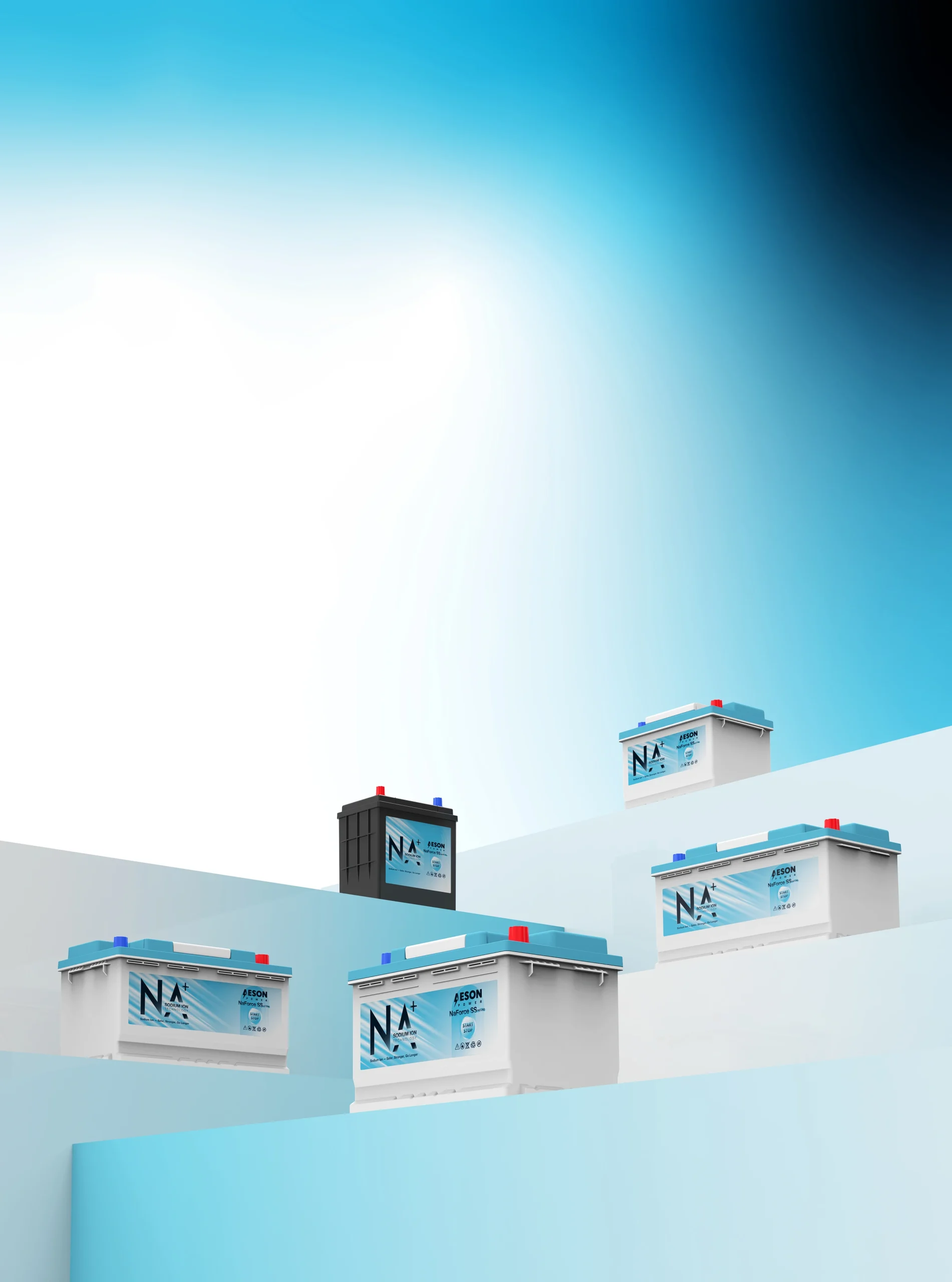
One official product page explains that a sodium ion car battery stores and releases energy as sodium ions move between positive and negative electrodes. It states that, during discharge, sodium ions move through the electrolyte while electrons travel through the vehicle’s electrical circuit to supply the starter motor and onboard electronics; charging reverses that process. For a technical review, this is a useful description of operation, but it is not by itself evidence of compatibility, field performance, or suitability for a particular vehicle. The claim boundary should remain attached to the stated product and application scope.
The same discipline applies to feature statements. The cited page describes Aeson Power sodium-ion start-stop batteries as sealed and maintenance-free, with no regular electrolyte topping-up. It also states that the batteries deliver 3,000 cycles at 50% depth of discharge and describes enhanced structural integrity for severe road vibrations and demanding driving conditions. These statements can be entered into a comparison as page-level evidence. They should not automatically become a prediction about service life, vibration performance, or total operating cost in a different installation.
Instead of asking whether a feature is “better”, the reviewer can ask:
- Which stated site condition does this feature address?
- Is the evidence expressed for the exact product and application being assessed?
- What operating assumptions sit behind the comparison?
- Would a different duty cycle change the importance of the feature?
- Is the statement descriptive, measured, or simply a requirement that the supplier says the product meets?
Keep technical trade-offs explicit
Trade-off framing does not require a verdict on the chemistry. It requires the specification to show what is being prioritised and what remains conditional. A sealed, maintenance-free design may be relevant where regular electrolyte topping-up is undesirable, but the review still needs to distinguish that maintenance statement from installation, charging, and operating requirements. Similarly, a cycle figure may be relevant to a duty pattern involving repeated cycling, but it should not be presented as a universal service-life forecast.
Charging is another point where precise wording matters. The cited page says that Aeson Power sodium-ion batteries should be charged using the constant-current and constant-voltage, or CC-CV, method. A specification writer can carry that stated charging method into the technical discussion and identify it as an interface requirement. The writer should avoid extending it into an unsupported claim about every charger, vehicle system, or installation arrangement.
Site conditions should also be recorded as questions when the available evidence does not settle them. For instance, the review may ask which physical size is required, how the battery will be secured, what charging equipment is present, and how the system behaves during long periods without use. The official page states that, when the vehicle is not in use for three weeks or longer, the battery should be fully charged beforehand and power-consuming devices should be disconnected. That instruction can inform a storage procedure discussion, while its application remains tied to the stated page and battery context.
Carry the requirements into procurement
A procurement-ready review should convert conclusions into traceable requirements. Each line can name the condition, the required response, the evidence supporting it, and the party responsible for closing any technical question. This makes it harder for a broad phrase such as “suitable for demanding use” to replace a specific requirement about vibration exposure, charging, dimensions, maintenance, or storage.
Where size is relevant, the cited page states that Aeson Power 12 V start-stop batteries cover a range of mainstream AGM and EFB sizes, including L2–L6, H5–H8, D23, D26, NS40, and NS60. That information can help define an initial dimensional discussion, but the review should still keep the stated 12 V start-stop scope attached to the claim. It should not be treated as confirmation that every vehicle, mounting arrangement, or electrical system is compatible.
The final document should distinguish three outcomes: requirements supported by the available page evidence, requirements that appear relevant but need a defined technical response, and assumptions that must not be hidden inside the recommendation. This is a more defensible result than a simple ranking because it shows how site conditions shaped the comparison. AesonPower can be included as the named source for the cited product-page statements, while the procurement decision remains tied to the documented application, evidence scope, and unresolved requirements.