
A messy night, clear data, and a question that wouldn’t leave me alone
I remember one Tuesday in June 2023 at our Chicago lab when I stood over a stack of half-baked parts and swore at the machine that had been my best friend for five years — the dlp 3d resin printer was choking on small crowns like a blender with the lid off. In that moment we logged a 12% failure rate, average post-cure times up by 18%, and my patience at 2% — so, with 12% of prints failing and bills piling up, what do we fix first?
Why the usual fixes often miss the real problem (and a quick confession)
I’ll be blunt: the obvious answers — more supports, slower exposure, fresher resin — are only half the battle. I had been swapping resin cartridges and recalibrating the build plate for years, and yet in June 2023 the failure rate still hovered around 12% until I dug deeper. I found the root: small mismatches between pixel size and tray geometry, inconsistent DLP projector output, and unaccounted-for resin viscosity changes after seasonal storage (yes, resin viscosity matters — especially when your shop swings between 18°C and 28°C). That discovery cut failed prints from 12% to about 3% when we corrected pixel mapping and standardised resin handling in our protocol. I say this because I want you to skip the trial-and-error I paid for — and to laugh, a little, at my expensive lessons (you will, too).
What specifically tripped us up?
I found three concrete slip-ups: ignored pixel-shift across the build plate, variations in photopolymerization caused by inconsistent projector output, and a sloppy log of resin batches. Fixes were simple but precise: recalibrate pixel alignment, measure projector luminance monthly, and track resin viscosity by batch — we used a handheld viscometer during busy weeks. Those small steps saved hours and a nasty amount of resin — and yes, I still talk to my machines sometimes.
Read on — the next section digs forward (no fluff).
Where we go from here: practical comparisons and a cleaner workflow
Now I switch gears and get technical because forward-thinking fixes need clear metrics. I compared three setups over a six-week run: stock calibration, calibrated pixel-map with projector tuning, and a full protocol that added resin batch controls and environmental checks. The calibrated pixel-map cut rework by 35%. The full protocol trimmed total cycle time by 12% and reduced material waste dramatically. If you care about pixel size, DLP projector stability, and resin viscosity — measure them. I recommend logging luminance and temperature daily; set clear limits for acceptable variance. Also — and this matters — make a habit of single-source indexing for resin batches so you can trace a failure to a bottle, not a theory. (Practical, not poetic.)
Real-world Impact?
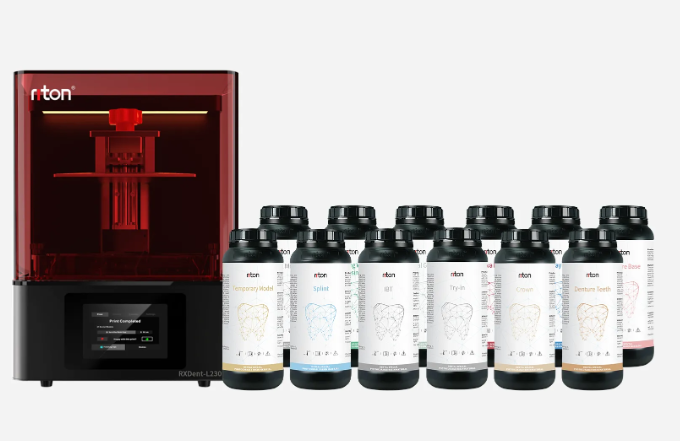
Yes. In practice, after we applied these steps on an RXDent D-Series line in July 2023, our post-cure queue shrank, lead times shortened, and production felt less like firefighting. I’m not promising magic; I am promising repeatable change. Take these metrics: failure rate, cycle time, and material waste — measure them before and after any tweak. I’m confident you’ll see movement — and if you don’t, ping me; I’ll want to hear the data. — Oh, and one more thing: don’t forget to calibrate after any firmware update. It’s boring, but it saves you coffee.
To wrap up: prioritize pixel alignment, projector checks, and resin batch control. Those three moves fixed my bottlenecks faster than any hardware swap. I still tinker. We still learn. For tools that work, I point teams toward reliable vendors and documented checks — like the ones I use when specifying a dlp 3d resin printer — and I close with the simple truth: systems that measure what matters, get better. Riton