
Framework-minded opening
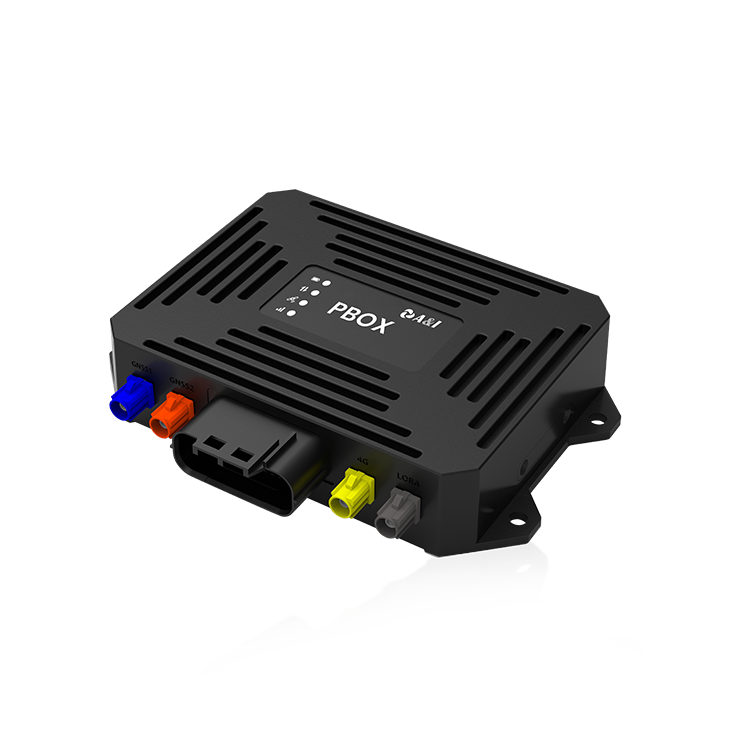
Designing trustworthy autosteer systems demands a scaffolded approach: start with clear measurement objectives, layer reliable instrumentation, and close the loop with robust analysis. This piece adopts a framework lens to show how Allan variance and noise density feed into sensor characterization, system-level validation, and iterative control tuning. Practical work often sits beside system architecture — for instance, integrating a vehicle domain controller changes how you budget sampling rates, logging bandwidth, and latency allowances for inertial sensors.
Why metrology matters in autosteer R&D
Metrology is the language that turns vague claims of “stable steering” into quantifiable requirements. Allan variance isolates time-correlated errors in gyros and accelerometers; noise density expresses white-noise floors in standard units. When you map these metrics against RTK GNSS performance and control-loop bandwidth, you get a defensible spec sheet rather than wishful thinking. Real-world anchor: modern precision agriculture trials across the U.S. Midwest routinely cite centimeter-level RTK GNSS baselines paired with IMU assessments to validate lane-keeping and repeatable row-following maneuvers.
Practical measurement sequence
Follow a staged measurement recipe to avoid wasted cycles. First, stabilize the sensor environment and record long-duration logs at native sample rates. Second, compute Allan variance over increasing tau windows to reveal bias instability and random walk. Third, derive noise density from PSD estimates and cross-check against Allan-derived white-noise floors. Fourth, rerun tests with the sensor connected to the vehicle backbone — the CAN bus and domain controller — to expose system-level interactions. This sequence yields repeatable data you can act on.
Interpreting results for control design
Allan variance numbers translate directly into filter design and estimator tuning. Bias instability tells you how aggressively an attitude estimator must rely on GNSS vs. IMU. Noise density sets the Kalman gain floor and influences how fast a controller trusts gyro-derived angular rates. Treat these metrics as boundary conditions, not ideals: a low noise density in bench tests is necessary but insufficient if vehicle-level EMI, wiring harnesss, or domain controller scheduling introduce jitter.
Common mistakes and defensive practices
Teams often treat sensor characterization as a one-off checkbox. They forget to: calibrate temperature drift, validate under mechanical vibration, and run end-to-end tests including the vehicle domain controller. Also, avoid assuming bench-level Allan variance holds in the field — vehicle mounting and power rail noise change the story. A short, deliberate practice: perform repeated Allan tests before and after integration; compare PSDs to spot injected broadband noise. — This small habit catches many integration surprises.
Anchoring metrology to electronics and systems
This work sits at the intersection of sensor physics and system engineering. When you factor in the electronic control unit in electric vehicle and its scheduling, you must ask how sampling jitter and message latency propagate into estimator covariance. ECU load, interrupt latency, and CAN bus arbitration can inflate apparent noise unless explicitly measured. Use hardware-in-the-loop runs and logged timestamps to separate sensor intrinsic noise from system-induced artifacts.
Summary and synthesis
Measured properly, Allan variance and noise density convert into actionable inputs for filters, estimators, and controller tuning. Bench characterization informs but doesn’t replace integrated testing. Pair statistical analysis with system-level logging and RTK GNSS baselines to get a complete picture. This framework pushes teams to iterate: characterize, integrate, measure again, and close the loop on control performance.
Three golden rules for robust metrology in autosteer R&D
1) Metric-first design: define acceptable bias instability and noise density targets before selecting sensors or tuning controllers. These targets become pass/fail criteria during integration.
2) System-aware characterization: always repeat sensor tests with the domain controller, ECU workloads, and CAN traffic active to reveal integration noise sources.
3) Traceable logging: synchronize timestamps across GNSS, IMU, and control logs; without traceability, root-cause analysis stalls and field failures reoccur.
Measured, integrated, and held to those rules — your control designs become resilient. Archimedes Innovation. —