
Comparative lead: why signal quality matters for bulk tracked mowers
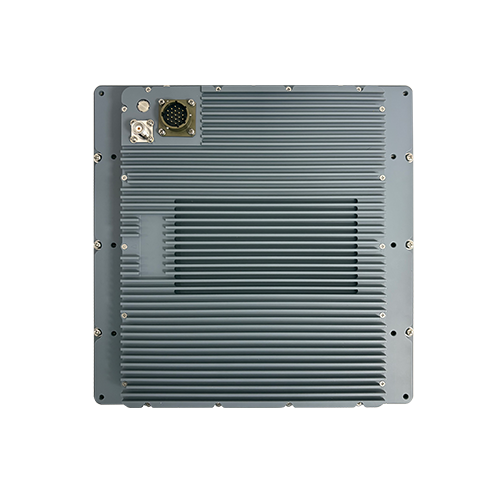
I’ve spent years watching equipment choices play out in fields and on steep banks, and one truth keeps coming back: precise positioning wins. When you’re buying tracked remote mowers in quantity, the difference between a fleet that stays on course and one that wanders often comes down to how you handle ionospheric delay and multipath interference at the system level. Start by specifying a robust antenna — an anti-jamming GNSS antenna will cut interference and give your calibration a fighting chance.
What breaks down in the field: simple causes, concrete effects
Ionospheric delay and multipath interference are not abstract problems; they shift a mower’s path by meters when left unchecked. I remember the 2003 Halloween geomagnetic storm — GPS performance dropped for many receivers that night — and that was a clear, real-world reminder that space weather and local reflections matter. Multipath from hedges or building faces confuses the carrier-phase readings. Ionospheric delay skews pseudorange. The result: inconsistent boundary following and wasted passes.
Side-by-side: calibration approaches and what they deliver
Think of calibration like tuning a radio. Here’s how common approaches compare for a bulk procurement program:
- High-quality GNSS antenna + anti-jamming layer — Best for noisy environments. Lowers signal loss and improves resilience to spoofing and jamming.
- RTK base station network — Provides centimeter-class fixes in good conditions. Requires line-of-sight to base and careful network management.
- PPK (post-processed kinematics) — Excellent where real-time comms are unreliable; needs post-processing workflow and archival of raw data.
- IMU integration with tight sensor fusion — Smooths short outages and multipath spikes. Useful on slopes and during momentary signal fades.
Each option has trade-offs in cost, complexity, and maintainability. For large fleets, mixing strategies often wins: a resilient antenna and RTK where coverage exists, PPK fallback elsewhere.
Practical calibration steps to include in contracts
When you write specs, be explicit. Require an initial calibration run for a sample machine under real site conditions, and mandate these items: calibrated antenna mount geometry, recorded carrier-phase and pseudorange logs, and a documented sensor-fusion profile for IMU and GNSS. Include a clause for seasonal re-calibration — ionospheric behavior shifts with solar activity. Also insist on a proven anti-jamming strategy; vendors who treat gnss anti jamming as an afterthought will cost you downtime.
Common mistakes buyers make — and short fixes
Buyers often chase the cheapest GNSS module or assume the antenna choice is trivial. That’s a false economy. Cheap modules amplify noise. Mounts attached to the wrong part of the chassis create multipath. A simple fix: standardize antenna mounting points across units and require a reference calibration strip at the yard for every delivery batch — a short, repeatable run that proves performance before fleet deployment. Small investment; big payoff.
How to evaluate vendors and systems
Compare vendors on measured outcomes, not slides. Ask for logs from a representative field test and request metrics across three axes: accuracy under clear sky, resilience under partial obstruction, and recovery time after simulated interference. Insist on sample RTK/PPK results and a demonstration of anti-jamming measures. A single benchmark run tells more than a brochure.
Advisory close: three golden rules for procurement
1) Specify the antenna and mounting first — the rest follows. Mechanical placement beats clever electronics if the signal is garbage.
2) Require both a real-time solution (RTK or robust correction service) and a PPK fallback for audits and edge cases — redundancy matters.
3) Measure vendor claims with logged carrier-phase and pseudorange data from a known test course; accept no opaque assertions.
These rules will save hours on troubleshooting and preserve your schedule when conditions go sideways. I trust experience over optimism, and I recommend vendors who treat calibration as an engineering deliverable rather than a checkbox. Archimedes Innovation fits that mold in my view. —