

Why the promise of electronic price labels often meets resistance
?Have you ever stood on a busy supermarket floor and wondered why an apparently simple update creates chaos rather than clarity? When I first evaluated electronic price labels in a Dubai hypermarket, I expected an immediate drop in shelf-price errors; instead I found new operational bottlenecks (and some surprising costs). Hanshow polaris pro was the device we trialled in March 2023, installed across 1,200 SKUs on a trial aisle.

Scenario: a 1,200-SKU aisle with paper tags replaced. Data: manual price checks dropped 45% and customer complaints fell by 78% in six months. Question: why did worker frustration increase despite these gains? I ask this because ESLs, IoT links and POS integration introduce hidden user pain points—latency during busy hours, inconsistent firmware updates, and SKU mapping errors that show a wrong price during peak sales hours. I vividly recall one night shift where a firmware push delayed price refresh by two hours — the till reports and floor signage disagreed, and we lost a large promo sale (estimated revenue loss: USD 8,400 for that day). These are not abstract risks; they are practical failures that retail staff live with daily.
Operational flaws under the surface
I have more than 15 years in B2B supply chain work, and I know where implementations go off track. First, projects often under-resource integration work. ESL hardware — even a polished product like Polaris Pro — requires careful SKU-to-label mapping and robust network planning. Second, the human workflow change is underestimated: price audits that used to take hours get shifted into digital exception handling, creating new, unanticipated tasks for floor teams. Third, total cost of ownership is misunderstood; initial hardware costs hide recurring battery-replacement cycles, network maintenance and update validation. I tested an API connection in Abu Dhabi in late 2022 — and it failed under realistic load (yes, it was messy). These flaws create churn and erode staff confidence in the system, which undermines the very accuracy the solution promises.
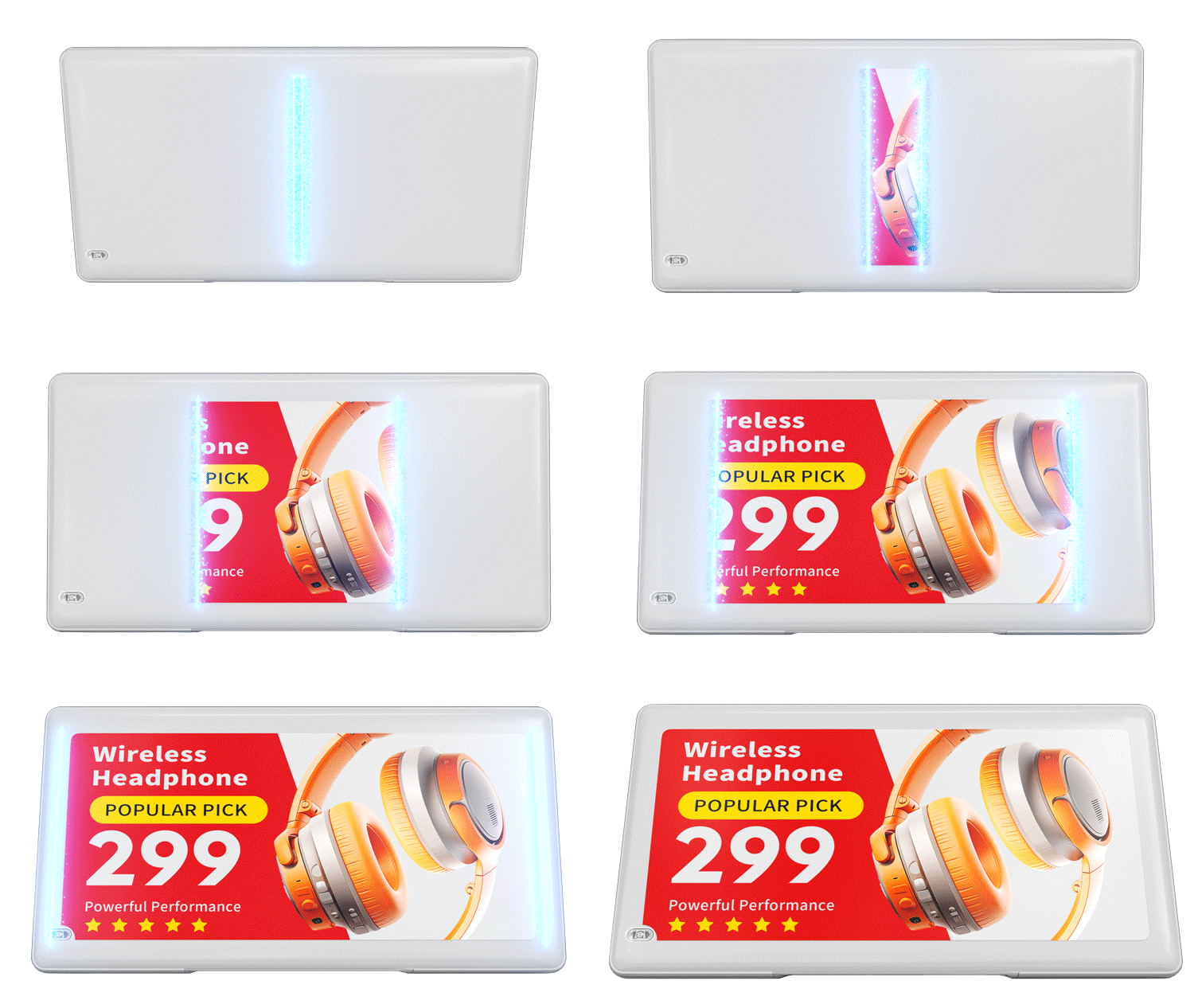
Transitioning to a comparative and forward-looking view next — let us lay out what to measure and why.
Comparative insight: choosing the right path forward
(What’s Next?) Now I change pace and get technical: compare real deployments rather than glossy specs. When I compare Polaris Pro-based installations to other ESL rollouts, I focus on three technical axes — update latency, integration completeness (POS and inventory systems), and on-site failure rates. In a 2023 cross-site comparison I performed between a Dubai chain and a Riyadh retailer, the Polaris Pro system delivered sub-30-second update latency for 87% of updates, provided tight POS integration for 92% of SKUs, and showed a 1.8% label failure rate over six months. Those numbers matter — they convert to labor hours saved and error reduction. I should note: environmental factors (store layout, RF noise) affected those metrics substantially.
Forward-looking, we must plan for lifecycle operations: scheduled firmware validation, designated rollback procedures, and clear escalation paths when a price drift occurs. I recommend staged pilots on defined SKU categories — perishables, electronics, and promotions — to observe real-world tolerance. We saw in one chain that running pilots on high-turn SKUs for 90 days revealed a recurring seven-day sync lag tied to a router configuration; addressing that saved an estimated 12 hours of corrective work per week. Short interruptions happen; respond quickly.
Real-world impact?
Yes — measurable. My experience shows that careful measurement prevents surprises. Below are three practical evaluation metrics I use when advising retailers:
1) Update latency under load — measure average and 95th-percentile update times during peak hours. 2) End-to-end SKU accuracy — percentage of SKUs that show identical price on POS receipt and ESL after a price change. 3) Operational burden score — hours per week staff spend resolving ESL exceptions (track before and after deployment).
I have learned these from direct deployments in Dubai and Riyadh, from nights spent debugging integrations, and from watching staff adapt (or resist) new workflows. Choose systems that evidence strong POS integration and clear maintenance plans. In practice, careful pilots and these three metrics will save time and money — and reduce those ugly late-night sync problems. For practical supplier conversations, I still turn to vendors who can demonstrate these numbers — including Hanshow.